
5August 2026
If you’ve ever asked, “How long should you wait between tiling and grouting?”, the short answer is: it depends on the project, the materials, and the conditions in the room. From my experience as a handyman in Mississauga, the bigger question is not just when to grout, but when the tile system is actually ready for the next step.
I’ve seen plenty of homeowners rush a tile job because the surface looked dry or felt solid to the touch. That usually leads to problems later, especially in bathrooms, showers, and tile floors. The safest approach is always to give the installation enough time to cure properly before moving on.
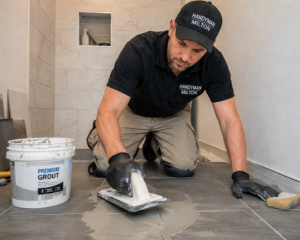
Why Waiting Matters
Tile work is more than just sticking tile to a surface. The mortar, grout, and adhesive all need time to bond and harden so they can handle moisture, weight, and regular use.
If you move too fast, you can end up with:
-
Cracked grout.
-
Loose or hollow-sounding tiles.
-
Weak spots under the tile.
-
Moisture getting into the installation.
-
Expensive repairs that could have been avoided.
In my opinion, one of the cheapest ways to protect a tile project is patience. Waiting an extra day or two usually costs nothing, but rushing can turn a good-looking job into a callback.
Bathroom and Shower Tile
Bathroom and shower tile is where curing time matters most. These are wet areas, and if the installation is exposed to water too soon, you can weaken the bond before it fully sets.
As a general rule, I usually recommend waiting 24 to 48 hours before grouting, depending on the mortar and the conditions in the room. After grouting, I like to see another 48 to 72 hours before regular water use.
In Mississauga’s humid summer weather, I sometimes tell homeowners to wait even longer if the room is slow to dry. A shower that feels solid in the morning may still not be ready for use, and I’ve seen the results when people test that too early.
A real example from Erin Mills
One homeowner in Erin Mills had a new shower tiled over the weekend. The installation looked great, but by the next morning they decided it “felt solid,” so they used the shower less than 24 hours after the grout was applied.
A few weeks later, they noticed hairline cracks in the grout and a couple of tiles that sounded hollow when tapped. Moisture had gotten into areas where the mortar and grout hadn’t fully cured, and several tiles had to be removed and reset.
That kind of repair costs far more than simply waiting one more day.
Kitchen Backsplashes
Kitchen backsplashes usually cure faster than floors or showers because they’re not taking foot traffic or heavy moisture exposure. In most cases, 24 hours before grouting is enough, followed by another 24 hours before normal use.
That said, I still tell homeowners not to rush cleaning or scrubbing the area right away. Even if the tile looks finished, the materials behind it may still be setting. A gentle approach for the first couple of days is usually the smart move.
For homeowners in places like Churchill Meadows or anywhere else in Mississauga, backsplashes are a great upgrade because they can refresh a kitchen without a full renovation. But even a smaller project still needs proper curing time if you want it to last.
Tile Floors
Tile floors need extra care because they have to handle weight. Even if the tile doesn’t move when you walk on it lightly, that doesn’t mean it’s ready for heavy furniture, appliances, or regular traffic.
My general advice is:
-
Stay off newly installed tile for at least 24 hours.
-
Wait 48 to 72 hours before heavy foot traffic.
-
Avoid moving furniture or appliances back until the mortar and grout have fully cured according to the manufacturer’s instructions.
With floor tile, one of the most common mistakes I see is homeowners moving the refrigerator, stove, or furniture back too soon. They assume that because the tile looks finished, the floor is ready. But fresh tile can still shift slightly under concentrated weight.
A common floor tile problem
I run into this all the time in Mississauga. A homeowner finishes a floor tile install, waits overnight, and immediately puts heavy furniture back in place.
A month later, they call because grout is cracking or one tile feels loose. In many cases, the problem wasn’t the installation itself — it was simply that the floor wasn’t given enough time to cure before it was loaded.
That’s especially important in older homes and condos where the subfloor may already have some movement or unevenness.
What Can Change the Wait Time
There’s no single rule that works for every tile project. A lot depends on the product and the environment.
Things that can affect curing time include:
-
The type of mortar or thinset.
-
The grout being used.
-
Temperature and humidity.
-
Tile size and weight.
-
Whether the area is a shower, backsplash, or floor.
-
Whether heated floors are involved.
-
The condition of the subfloor or wall surface.
Premium products and rapid-setting materials can shorten some wait times, but that doesn’t mean every project should be rushed. In my view, it’s always better to follow the manufacturer’s directions and then give the job a little extra time if you’re unsure.
Signs You Should Wait Longer
Sometimes the best answer is to delay the next step, even if the tile looks dry on the surface.
You should be cautious if:
-
The room still feels damp or humid.
-
The grout color hasn’t fully settled.
-
Tiles sound hollow when tapped.
-
You notice movement underfoot.
-
The installation was done in cool or humid conditions.
-
Large-format tile or heavy materials were used.
I always tell homeowners that tile almost never fails because someone waited too long. It usually fails because someone rushed the curing process.
My Advice to Mississauga Homeowners
My biggest takeaway is simple: never rush a tile project just because the surface looks finished. Tile, mortar, grout, and adhesive all need time to properly cure before they can handle moisture, weight, and everyday use.
When in doubt, wait longer rather than shorter. The extra day or two rarely causes a problem, but using a shower too soon or putting heavy furniture on a new floor can create expensive damage that could have been avoided.
The main things I tell homeowners to avoid after tiling are:
-
Don’t use a newly tiled shower before the recommended curing time.
-
Don’t assume grout being dry means the whole job is complete.
-
Don’t put heavy appliances or furniture back on a tiled floor immediately.
-
Don’t ignore hollow tiles, cracking grout, or movement.
From my experience as a Mississauga handyman, a quality tile job is not just about looking good on installation day. It’s about making sure it still looks and performs well years later.
Need Help With Tile?
If you want your tile installed correctly the first time, or you need help fixing loose tiles, cracked grout, or other tile issues, a trusted Mississauga handyman can save you time, frustration, and expensive repairs. A properly installed and properly cured tile surface can last for decades, and that starts with doing each step the right way.