
21August 2026
When planning a bathroom renovation, it is easy to get caught up in the fun part. Picking out beautiful tile, a sleek new vanity, and the perfect shower fixtures is exciting. Many Mississauga homeowners look at a three to five thousand dollar finish package and think that is basically their entire budget.
From my experience as a Mississauga handyman, I can tell you that it isn’t.
Two bathrooms can look almost identical on the surface but have completely different renovation costs once you open up the walls. The real expense of a high-quality remodel isn’t just what you see. It is the work required to make everything underneath those finishes solid, level, properly waterproofed, and built to last.
If you want to avoid a tight budget that forces you to stop halfway through, you need to understand exactly where your hard-earned dollars go. Here is the realistic budget breakdown for a typical bathroom renovation.
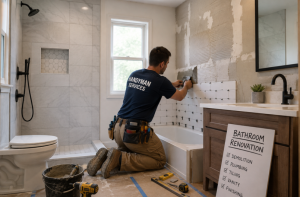
The Three Buckets of a Bathroom Budget
Instead of assuming your fixtures and tile will consume the bulk of your funds, you should look at your budget through three distinct buckets. While exact numbers change based on the size of the room and whether you alter the layout, this is a highly reliable planning framework for your renovation.
Labour, Demolition, and Preparation
You should budget roughly forty percent of your total funds for this first bucket. This category covers demolition, waste disposal, surface preparation, framing corrections, plumbing and electrical modifications, and the skilled installation of your new materials.
Tearing out old spaces without damaging structural elements takes significant time. Truing up uneven walls and meticulously laying tile requires real expertise. The preparation work behind the finished surfaces is the single most misunderstood expense in the entire project.
Rough Materials and Behind-the-Wall Work
You should allocate about twenty-five percent of your budget to the materials you will never see once the project is finished. This includes waterproofing systems, cement backer boards, thinset, mortar, fasteners, subfloor repairs, and hidden plumbing components.
Homeowners routinely underestimate the cost of the raw materials required to properly seal a wet area. Spending money on the underlying construction is what prevents catastrophic failures down the road.
Finish Materials and Fixtures
The remaining thirty-five percent of your budget goes toward the visible elements of the room. This bucket includes your tile, vanity, countertop, toilet, tub or shower base, faucets, lighting, mirrors, and hardware.
This percentage is flexible and depends entirely on your personal taste. Choosing expensive designer tiles or a premium luxury vanity can easily push this category well past forty percent of your total spend. Choosing mid-range finishes can help keep this number down.
The Mississauga Factor: Aging Homes and GTA Sourcing
Where you live in the Greater Toronto Area significantly impacts your hidden costs. Your home’s neighborhood dictates your overall budget risk.
Older Neighborhoods vs Suburban Developments
In older areas like Port Credit and Streetsville, you can run into older plumbing, uneven walls or floors, outdated electrical work, and framing that doesn’t match modern standards. These surprises add labour and material costs quickly.
In Erin Mills and other established suburban areas, the bathroom has often been renovated at least once already. This creates another variable because you do not know what materials or methods the previous contractor used until you start digging. You must budget based on the house you actually have, not the perfect pictures you see online.
Sourcing Materials within the GTA
Mississauga homeowners have access to a huge range of suppliers, showrooms, tile stores, and big-box retailers. While this is an advantage, material availability can still break your budget schedule.
An inexpensive fixture is not a bargain if it is backordered for six weeks while your home sits in a construction zone. I always recommend confirming the price, availability, quantity, and lead time before committing to a renovation schedule.
A Handyman Case Study on the Danger of the Quick Fix
I once took on a project that initially looked like a straightforward cosmetic tile update. The homeowner had tightly budgeted for new tile, fixtures, and finishing work.
The moment we opened up the shower walls, the plan changed. Years of slow, hidden moisture tracking behind the old tile had completely rotted out the wall framing and compromised the subfloor.
We could not just lay new tile over a decaying structure. We had to pause, remediate the water damage, replace the subfloor, and reframe portions of the wall. The extra labour, replacement materials, and disposal fees completely altered their initial budget.
From that job on, I established a strict rule. Never cover up a problem just because it will be hidden afterward. If there is evidence of moisture damage, poor framing, or old plumbing, deal with it while everything is open. It is significantly cheaper to fix it right the first time than to discover the damage again a year or two later.
Smart Budgeting: Where to Splurge and Where to Save
If you are working with a tight budget but still want a high-end, custom look, you have to play it smart. My advice is to splurge on what protects the bathroom and what you interact with every day. Save on decorative items that are easily replaced later.
Where to Splurge for Long-Term Quality
- Spend your money on the shower area. Invest in high-quality waterproofing systems, good-quality plumbing valves, and professional installation. Waterproofing is not the place to learn via a DIY video.
- Keep your existing layout if you want to save thousands. Leaving the toilet, vanity, and shower in their original footprints avoids massive plumbing relocation costs that swallow budgets whole.
Where to Save Safely Without Sacrificing Style
- Choose reasonably priced porcelain tile. Properly installed porcelain looks fantastic and gives an upscale appearance without the price tag or maintenance of natural stone.
- Choose a simple tile layout. Stick to classic patterns that minimize complicated, wasteful cuts. Simple layouts look cleaner and cost less in installation labour.
- Opt for a mid-range vanity. You can make a standard vanity look like a luxury custom piece simply by upgrading the cabinet hardware, pairing it with a quality mirror, and installing great lighting.
- Save on accessories. Towel bars, toilet-paper holders, mirrors, and similar accessories do not have to be designer-priced to look great.
The Ten to Fifteen Percent Golden Buffer
Before you sign any contract or buy a single piece of tile, set aside a ten to fifteen percent contingency fund. Do not touch this money for aesthetic upgrades or premium fixtures. Keep it strictly reserved for the hidden surprises that older homes love to hide behind their walls.
I always tell homeowners that it is better to plan for a potential surprise and not need the money, than to start a project with a tight budget and have to stop halfway through. Budgeting for the work you won’t see ensures your renovation will look beautiful and last for decades.
Ready to start planning your own renovation? Visit our bathroom renovation page to see our past projects, or fill out the simple request form directly on our home page.
If you would rather speak to a local Mississauga handyman right away to discuss your budget and ideas, give us a call today at 647-699-3193 to get started.