
30July 2026
Mounting a TV on the wall can completely change the look of a room. It creates a cleaner, more modern appearance, saves space, and can improve the viewing experience. However, one of the biggest questions homeowners ask before installing a wall-mounted TV is: “Can my wall actually support it?”
From my experience as a handyman in Mississauga, this is one of the most important questions to answer before drilling any holes. A TV mount is not the same as hanging a picture frame. A mounted TV creates weight, tension, and leverage on the wall, especially with larger screens and full-motion brackets.
Mississauga homes have a wide variety of construction styles. I work on everything from older plaster-and-lath homes in areas like Port Credit to newer drywall condos around City Centre, and every wall requires a different approach.
The biggest mistake homeowners make is assuming the visible wall surface tells the whole story. Drywall, plaster, brick, and concrete are only part of the picture. The real question is what structural support exists behind the wall.
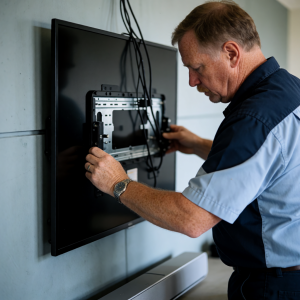
The First Question I Ask: What Type of Wall Are We Mounting On?
Before I install any TV mount, I first identify the wall type. The correct mounting method depends on what is behind the surface.
A 65-inch TV mounted on wood studs requires a completely different approach than a 65-inch TV mounted on a concrete condo wall.
The common wall types I see in Mississauga include:
- Drywall over wood studs
- Concrete or concrete block walls
- Brick walls
- Plaster and lathe walls
- Drywall over metal studs
- Fireplace feature walls with brick, stone, or other materials
Each one requires different hardware, tools, and installation techniques.
Drywall With Wood Studs: The Most Common Setup
The majority of my residential TV mounting jobs involve drywall with wood studs. This is common in detached homes, townhouses, basements, and many low-rise buildings.
This is usually the ideal situation because the TV mount can be secured directly into the framing behind the drywall.
My process is simple:
- Locate the studs using a reliable stud finder.
- Confirm the stud location rather than relying only on a single reading.
- Mark the stud edges and centre points.
- Position the mount so it attaches securely into the framing.
For larger TVs, especially 55-inch, 65-inch, and 75-inch models, I prefer the mount to span across two studs whenever possible.
A common misconception is that drywall itself is holding the TV. It is not. The drywall is only the finished surface. The strength comes from the screws or lag bolts being properly secured into the studs behind it.
Concrete and Condo Walls Require a Different Approach
Many Mississauga condos, especially around areas like Square One, Hurontario, and Erin Mills, have concrete walls. These walls can actually provide excellent support, but they require the right tools and anchors.
I regularly install TVs on concrete walls where homeowners are concerned because they are unsure what is behind the paint.
For example, I recently installed a 65-inch full-motion TV mount on a concrete condo wall. The challenge was that we did not know where rebar or embedded materials were located.
My approach was:
- Identify the wall material.
- Drill a small test hole using a masonry bit.
- Confirm that we were dealing with solid concrete.
- Adjust the mounting location slightly when the first hole encountered metal.
- Install heavy-duty concrete anchors with proper embedment depth.
The lesson from jobs like this is that concrete is not a problem when you use the right installation method. The problem comes from treating concrete like drywall and using the wrong fasteners.
Brick and Fireplace Walls Need Extra Planning
TVs above fireplaces are one of the most requested installations I see. They look great, but they are also one of the areas where homeowners should be careful.
A fireplace wall could be:
- Solid brick
- Stone veneer
- Cultured stone over drywall
- Drywall over block
- A combination of different materials
Before drilling, I need to know what is actually behind the finished surface.
I have installed TVs above fireplaces where the wall sounded hollow when tapped. In some cases, homeowners assumed this meant the wall was weak. After checking, I discovered the drywall was simply covering concrete block behind it.
The important thing is not whether the wall sounds hollow. The important thing is whether the mount is anchored into something structurally strong.
For fireplace installations, I also consider:
- Heat exposure
- Mount height
- Viewing angle
- Cable routing
- Whether the customer wants a fixed, tilt, or full-motion mount
Sometimes the best answer is not simply “yes, it can be mounted.” Sometimes it is recommending a better location or a different mount style.
Older Plaster and Lathe Walls Require More Care
Some older Mississauga and Peel Region homes still have plaster-and-lath walls. These walls can be strong, but they require a more careful approach.
The challenge with plaster is that it can crack or crumble if it is drilled incorrectly.
For these installations, I focus on:
- Finding the actual studs behind the plaster.
- Avoiding unnecessary stress on the surface.
- Using appropriate screw lengths.
- Spreading the load across multiple attachment points.
I have worked on older homes where the homeowner was worried because the wall already had small cracks and previous repairs. After checking the construction, I was able to safely install the TV by securing into the studs and distributing the load properly.
The biggest mistake with plaster walls is assuming that because the wall feels solid, any mounting method will work. The structure behind the plaster matters most.
Metal Stud Walls Are Common in Condos and Commercial Spaces
Metal studs are another situation where homeowners often get into trouble.
Many newer buildings use metal framing instead of traditional wood studs. The problem is that metal studs are not the same strength as wood framing.
A standard screw into a thin metal stud is not the same as securing into a solid wood stud.
For metal stud installations, I may recommend:
- Specialized anchors designed for metal framing
- Reinforcement behind the drywall
- A wider mounting plate
- A different mount style
I am especially cautious with full-motion mounts on metal studs because the extending arm creates additional leverage on the wall.
My Biggest Rule: If You Can’t Find a Stud, Do Not Mount the TV
This is the rule I give homeowners all the time.
If you cannot confidently identify where the structural support is, do not start drilling.
There are situations where drywall anchors can work, but they are very limited. A small fixed TV mount on a lightweight television is very different from a large TV on a full-motion arm.
A TV that extends away from the wall creates much more force than a TV sitting flat against the surface.
The further the TV moves away from the wall, the more stress is placed on the mounting points.
Common Mistakes Homeowners Make When Mounting TVs
Over the years, I have seen many avoidable mistakes. Most come from misunderstanding how TV mounts work.
Relying Only on Drywall Anchors
One of the most common mistakes is trusting the weight rating printed on an anchor package.
A homeowner may see an anchor rated for 75 pounds and assume it will safely hold a 65-inch TV.
The problem is those ratings often do not account for the pulling and twisting forces created by a TV mount.
A fixed TV close to the wall creates one type of force. A full-motion arm that extends 20 inches creates a completely different situation.
Assuming Every Wall Is the Same
A mounting method that works in one house may not work in another.
A townhouse built in the 1990s, a downtown condo, and an older bungalow may all have completely different wall structures.
The first step is always identifying what you are working with.
Treating TV Mounting Like Hanging a Picture
A picture frame is stationary. A TV is often adjusted, tilted, pulled forward, connected, disconnected, and moved.
That repeated movement creates stress over time.
A TV installation should be treated more like a small structural project than a simple decorating job.
Choosing the Wrong Mount
The mount itself matters.
A fixed mount puts the least stress on the wall.
A tilt mount creates slightly more leverage.
A full-motion mount creates the most stress because the TV can be extended away from the wall.
The mounting method should match the type of bracket being installed.
My Inspection Process Before Installing Any TV
When I arrive at a customer’s home, I follow a process before making any holes.
First, I ask questions:
- What size is the TV?
- What is the TV weight?
- What type of mount do you want?
- Do you want cables hidden?
- Is this a condo, rental, or owned home?
Then I inspect the wall.
I look for:
- Wall material
- Cracks or damage
- Previous mounting holes
- Signs of repairs
- Possible electrical or plumbing concerns
Next, I locate the structural support.
Depending on the wall, that may involve:
- Finding wood studs
- Confirming concrete or block
- Testing masonry
- Checking plaster conditions
- Identifying metal framing
Before final installation, I also confirm the exact TV position with the homeowner.
A few inches can make a big difference if moving the mount allows me to hit stronger support.
When DIY TV Mounting Is Fine
I am not against DIY projects. Some TV installations are perfectly reasonable for homeowners.
DIY may be suitable when:
- The TV is smaller and lighter.
- The wall is standard drywall with confirmed wood studs.
- You are using a quality mount.
- You understand the hardware requirements.
- You are comfortable safely drilling into the wall.
The key word is confidence. If you are guessing where the support is, that is where problems start.
When I Recommend Hiring a Professional
There are certain situations where bringing in someone experienced makes sense.
I recommend professional installation when:
- The wall has metal studs.
- The wall is plaster and lathe.
- The TV is going over a fireplace.
- The wall is brick, stone, or concrete.
- You want a full-motion mount.
- You need cables hidden inside the wall.
- You are unsure what is behind the surface.
The cost of fixing a damaged wall or replacing a broken TV is usually much higher than getting the installation done properly the first time.
Questions to Ask Before Hiring a TV Mounting Professional
If you are hiring a handyman, I recommend asking a few questions first:
- Are you insured?
- Have you mounted TVs on this specific wall type before?
- Do you provide the correct anchors and hardware?
- How do you handle hidden wires or obstacles inside the wall?
- What happens if you cannot safely mount the TV in the requested location?
Experience with different wall types matters. A person who has only mounted TVs on drywall with wood studs may not have the right approach for a concrete condo wall or a fireplace installation.
Final Advice From a Mississauga Handyman
The biggest thing homeowners should understand is that the wall surface is not what holds the TV. The structure behind the wall is what matters.
Before mounting a TV, know:
- What type of wall you have.
- Where the structural support is.
- How much your TV and mount weigh.
- How much leverage the mount creates.
My golden rule remains simple: If you cannot find solid support, do not mount the TV.
A properly installed wall-mounted TV should feel secure, look clean, and give you peace of mind for years. Taking the time to inspect the wall first is what separates a safe installation from a risky one.