
12August 2026
If you’ve ever gotten a fence repair quote and thought, “That’s way more than I expected,” you’re not alone. Many homeowners in Mississauga and across Ontario assume a leaning panel or loose post is a quick fix, only to find the final bill is two or three times higher. The truth is, fence repairs often hide bigger problems beneath the surface. As a local handyman who’s inspected and repaired hundreds of residential fences, I’ve seen how hidden rot, structural issues, and access challenges can turn a simple job into a major project. This post breaks down exactly why fence repairs cost more than expected—and how you can avoid surprises.
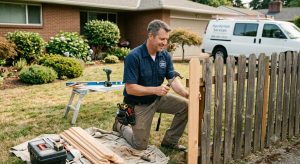
The Real Reasons Fence Repairs End Up Costing More
Most homeowners price a repair based on what they can see: a broken board, a sagging gate, or a post that’s leaning. But fences are structural systems, and damage rarely stays isolated. Here are the top reasons costs climb once work begins.
Hidden Rot and Structural Damage
A fence board may look like the main problem, but once it’s removed, the post, rails, or framing underneath can also be rotten or weakened. In Mississauga, where we deal with freeze-thaw cycles, snow load, and humid summers, wood fences are especially prone to moisture damage at ground level. What starts as a $50 board replacement can quickly become a $500+ job once you discover the post is compromised below the soil line.
Post Replacement Is Often Necessary
A leaning fence often isn’t fixed by simply straightening the panel. If the post is damaged, loose, or rotted below ground, it may need to be dug out and replaced. Post replacement is labour-intensive: it involves digging out old concrete or compacted soil, setting the new post correctly, getting it plumb and aligned, and allowing the structure to cure properly. This alone can double or triple the original estimate.
More Damage Than Expected
Once one damaged section is opened up, adjacent panels or rails may also turn out to be compromised. Fences age as a system, and if one section has failed, neighbouring sections are often close behind. Replacing only the obvious damage can lead to another repair call in a few months, so doing a slightly larger repair properly often saves money long-term.
Difficult Access Increases Labour
Tight side yards, landscaping, sheds, decks, and other obstacles can make removing old materials and bringing in new ones much more labour-intensive. If a crew can’t bring materials in with a cart or needs to hand-carry panels through a narrow gate, expect the labour portion of your quote to reflect that reality.
Material and Finishing Costs Are Often Overlooked
Homeowners sometimes budget only for the repair itself and overlook matching existing materials, disposal of old fencing, hardware, staining, or painting. If your fence is older, finding matching boards or rails can be tricky, and finishing work (staining, sealing, painting) adds both material and labour costs.
A Real Mississauga Fence Repair Case Study
A homeowner in Mississauga contacted me because one section of their backyard wood fence was leaning. They expected it to be a relatively simple post repair, maybe $300–$500 to dig out and reset one post.
Once I inspected it, I found that the main post was badly rotted below ground, and two neighbouring posts and several horizontal rails were also weakened. The original repair would have involved replacing one post, but the condition of the surrounding structure meant that replacing only that post would have been a short-term fix.
The scope changed to replacing several posts, the damaged rails, and a few fence panels, followed by making sure the entire section was properly aligned. What the homeowner initially expected to be a $300–$500 repair ended up closer to the $1,000–$1,500 range, depending on the materials and amount of labour required.
The main lesson is that fence problems are often bigger underneath than they appear from the outside. I try to identify those issues before starting so homeowners understand the possible additional costs rather than being surprised halfway through the job.
DIY Fence Repair vs. Hiring a Pro: When to Call a Handyman
From a Mississauga handyman perspective, I think DIY fence repairs are perfectly reasonable when the problem is small and straightforward. Homeowners can usually handle things like:
-
Replacing a few damaged boards
-
Tightening loose hardware
-
Installing new screws or brackets
-
Making minor gate adjustments
Where DIY repairs tend to become frustrating is when fence posts are involved. Replacing a post means digging, removing concrete or compacted soil, setting the new post correctly, getting it plumb and aligned, and allowing the structure to cure properly. It’s also easy to underestimate how much time and physical work that takes.
I’d also recommend calling a professional when there is:
-
Significant rot in posts or rails
-
Multiple leaning posts
-
Extensive storm damage
-
Large sections that need replacement
-
Difficult access (tight yards, obstacles, slopes)
Those jobs can quickly turn into multiple trips to the hardware store, wasted materials, and a repair that still needs to be redone. My general rule is: if it’s a cosmetic or small hardware repair, DIY can make sense; if the fence has a structural problem, it’s usually worth having a handyman assess it first.
How to Avoid Unexpected Fence Repair Costs
My biggest piece of advice is don’t price the repair based only on what you can see from a distance. Before getting a quote or starting a DIY repair, inspect the posts, rails, and the bottom of the fence panels for rot, movement, and water damage. A fence panel may look like the problem when the real issue is a failing post underneath it.
Here’s a quick pre-repair checklist:
-
Inspect beyond the obvious damage: Check posts, rails, and the bottom of panels for soft spots, discoloration, or movement.
-
Ask what’s included in the quote: Does it cover removal and disposal, new posts or concrete, hardware, materials, and any finishing work?
-
Budget for contingencies: If the fence is older, keep a small contingency in the budget, roughly 10–20%, on case hidden damage is uncovered.
-
Don’t wait for major damage: In Mississauga, avoid waiting until a fence is severely damaged after a major storm. Getting minor issues fixed earlier is usually much less expensive than replacing several sections at once.
Final Thoughts: Why Transparency Matters in Fence Repair
Fence repairs cost more than expected when homeowners (and even some contractors) underestimate the structural nature of the problem. A leaning panel is rarely just a panel issue, it’s often a sign of post failure, rot, or systemic aging. By understanding the real reasons costs climb, knowing when to DIY vs. call a pro, and doing a thorough inspection before work begins, you can avoid surprises and get a repair that lasts.
If you’re in Mississauga, Oakville, Brampton, or the surrounding area and need a honest assessment of your fence repair needs, reach out. I’ll give you a clear scope of work, explain any potential hidden issues upfront, and make sure you understand exactly what you’re paying for—before the first post comes out of the ground.