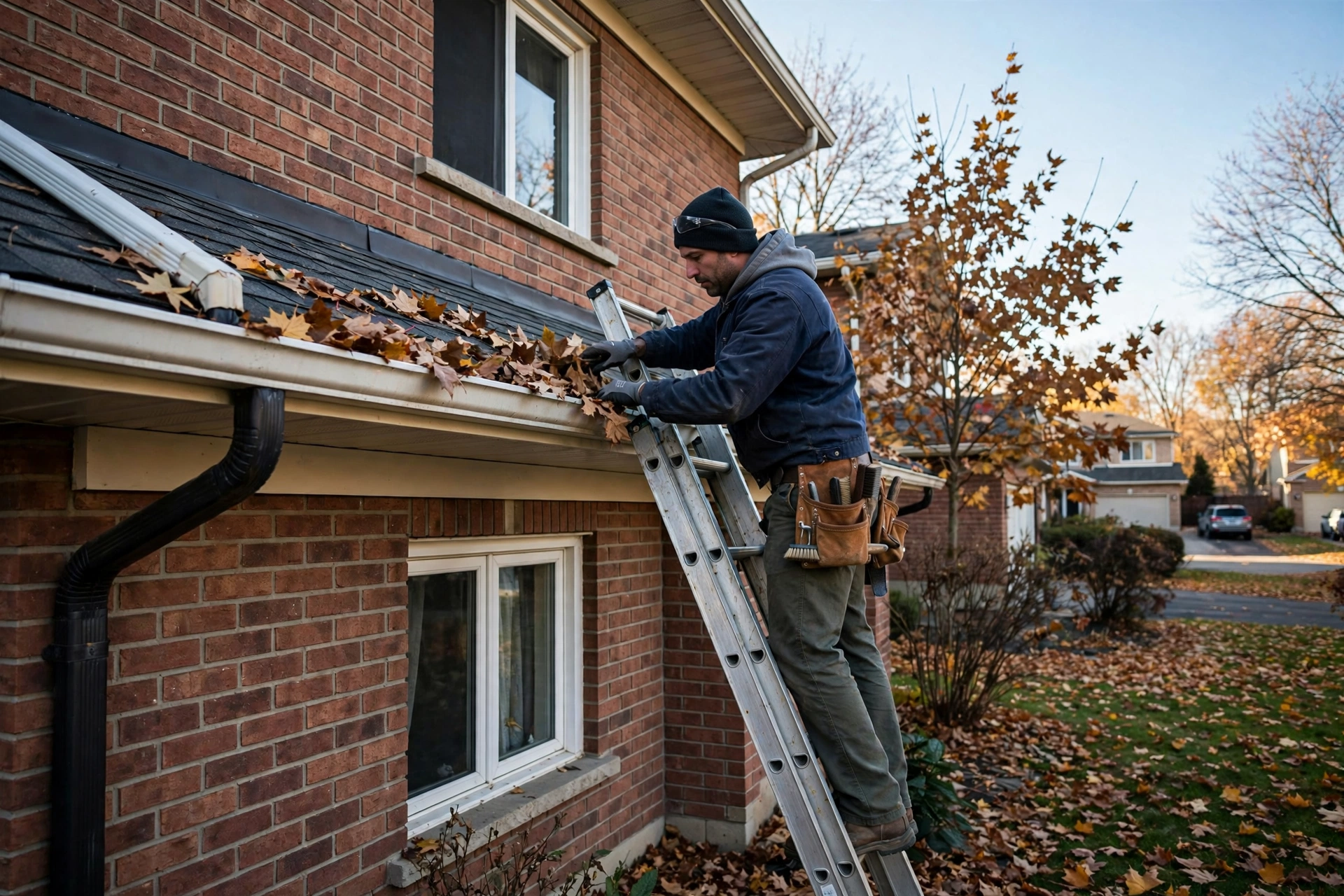

In a newer home in Churchill Meadows or Lisgar, a wall mark is usually just a wall mark — a moving-day dent or a doorknob hole. In an older Mississauga home, the same mark deserves a second look. Houses in Port Credit and Lorne Park from the 1950s and 60s, village homes in Streetsville, and the 1970s and 1980s subdivisions across Erin Mills, Meadowvale, Cooksville, and Malton have had decades of freeze and thaw, humidity swings, and layered renovations. Drywall records what a house has been through — settling, moisture, and past repairs — if you know how to read it.
This guide walks through the damage Mississauga homeowners in older houses see most often: what each type usually means, what can be repaired and painted, what is signalling something bigger underneath, and the point at which a coat of paint stops being a fix and becomes a cover-up.
Why Older Mississauga Homes Show More Drywall Damage
Three local factors do most of the work. First, age and movement: older framing has dried and shifted for decades, and Ontario’s seasonal swing — humid summers, dry heated winters — shows up first at corners, seams, and the tops of door and window openings. Second, water: lake-effect weather, spring thaws, and heavy rain eventually find older roofs, plumbing, and tub and window caulking, and drywall absorbs water long before you see a drip. Third, history: many homes in Cooksville, Port Credit, and Erin Mills mix original plaster or early drywall with later additions and old patches, and cracks often appear where old meets new. None of that means every crack is a crisis. It means the pattern matters more than the mark itself.
Hairline Cracks at Corners and Doorways
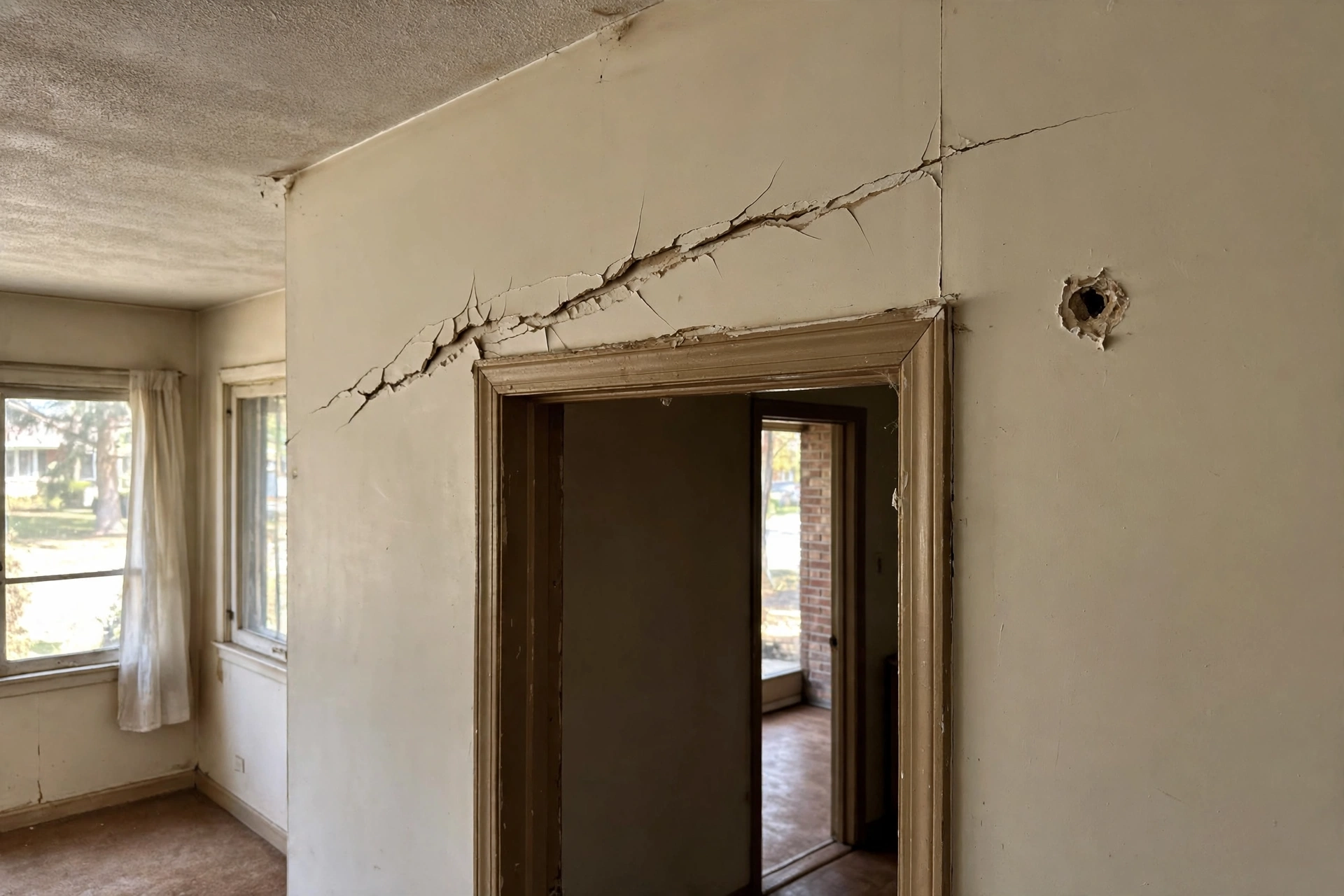
The most common sight is a thin crack from the corner of a door or window frame, or a hairline along a ceiling corner or seam. It usually signals normal settling and seasonal movement, especially if it is thin, dry, and stable. Corners above doors in 1970s and 80s Erin Mills and Meadowvale homes are classic spots.
What to do: if the crack is hairline, the wall feels solid, and there is no stain, softness, or bulge, it is a repair-and-repaint job. The crack needs to be opened slightly, taped or filled properly, sanded, and primed — simply painting over an unrepaired hairline almost always lets it show again within a season, because paint has no strength to bridge a moving joint.
When to look closer: a crack that keeps widening, reopens in the same place after a proper repair, runs diagonally across a whole wall, or arrives with sticking doors, sloping floors, or cracks in the foundation or exterior brick. One stable crack is cosmetic. A pattern of growing cracks is the house telling you something is still moving, and the drywall repair should wait until the cause is understood.
Nail Pops and Seam Lines
Nail pops — small bumps or circles pushing through the paint, common along stud lines and ceiling joists — are almost expected in homes of a certain age. As framing lumber dried over the years, it shrank slightly away from the drywall fasteners, and everyday vibration works the nail or screw head outward. Long, faint ridges along seams usually mean original tape and compound have aged, shrunk, or were feathered too narrowly in the first place.
In most cases these are straightforward: reset the fastener, add a screw beside it, then patch, sand, and paint. This is core drywall repair in Mississauga work, and homeowners in Streetsville and Lorne Park often batch pops and seam fixes together before painting. The exception is a ceiling that also sags or feels spongy after a leak — that board may need replacing, not patching.
Holes, Dents, and Everyday Damage
Doorknob holes, furniture dents in tight Meadowvale hallways, and stairwell scuffs signal nothing except contact.
Small holes are patch-and-paint work. Larger holes need a backed patch or a cut-out section of new board, finished in stages so the repair disappears. One caution: if the board around a hole feels soft and papery or crumbles widely, moisture may have weakened it — which moves it into the next category.
Water Stains, Bubbling Paint, and Soft Drywall
This is the category where paint alone is not enough, and where painting over the problem does real harm.
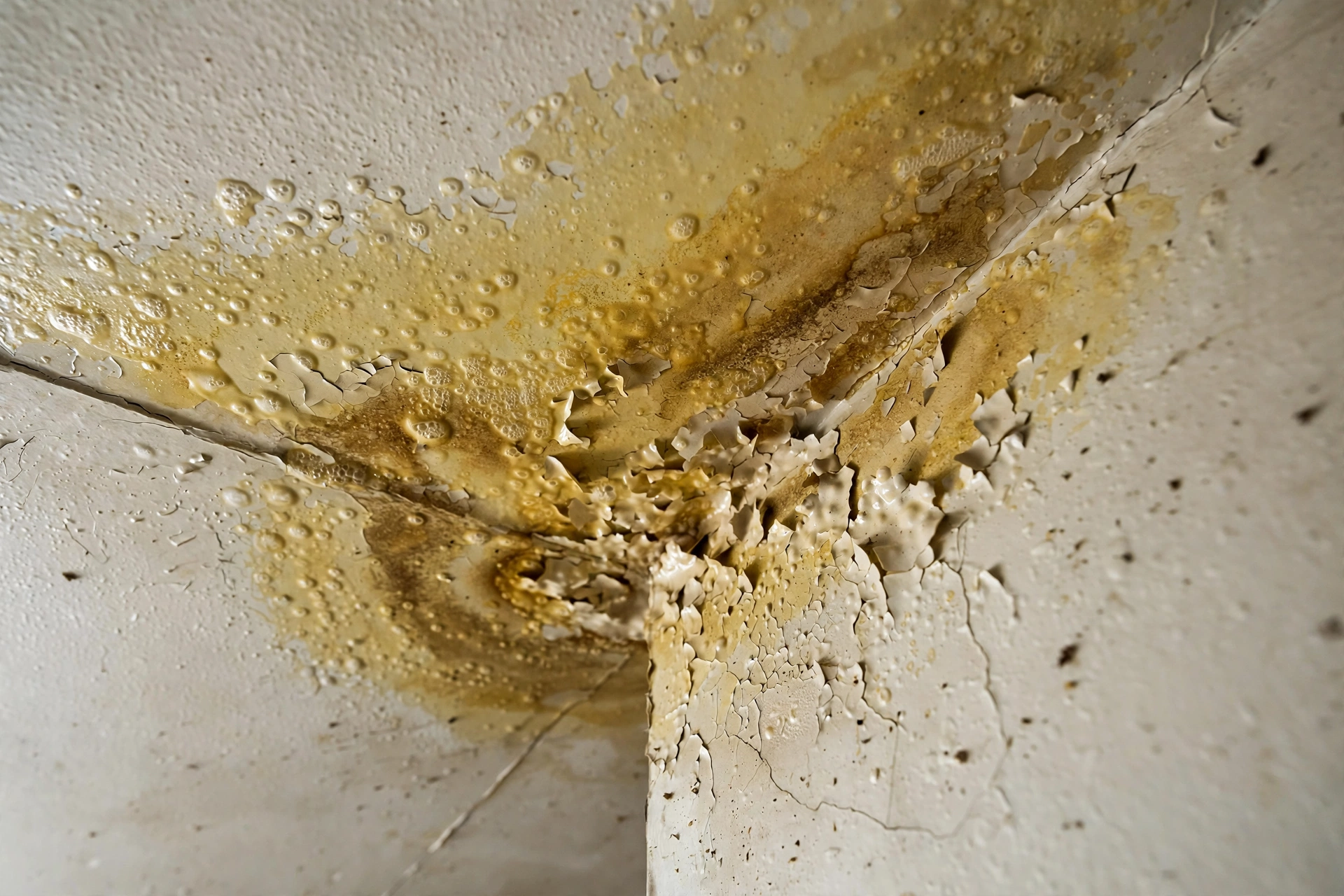
A yellow or brown ceiling stain in a Malton or Cooksville home, bubbling or peeling paint on a bathroom wall in Port Credit, a soft spot low on a wall in a Lorne Park basement — all of them point to water that has already been inside the wall or ceiling. The stain is the last stage, not the first.
Read it this way:
- A dry, old, stable stain with firm drywall around it usually means a past leak that has been fixed — a roof repair, a replaced valve, an upstairs tub that was re-caulked. Once you are confident the source is gone and the board tests dry and solid, the stained section can be sealed with a stain-blocking primer and painted, or cut out and replaced if the finish is rough.
- A stain that is growing, darkening, or returning after rain or after the upstairs bathroom is used means the source is still active. Painting it will only trap moisture and buy a bigger repair later. Find and fix the source first — roof, plumbing, window, or bathroom seal — then let the area dry fully before any drywall work.
- Soft, spongy, or crumbling drywall has lost its strength and should be cut out and replaced, not filled. Soft board around tubs and showers is especially common in older bathrooms, where failed grout and caulking have let small amounts of water in for years. That is why bathroom drywall and caulking services in Mississauga so often belong in the same conversation — replacing the board without renewing the seals that failed just restarts the clock.
- Bubbling paint without a stain can also be a moisture or adhesion problem, particularly in bathrooms and kitchens with poor ventilation. Scraping back to a sound surface, addressing ventilation, and priming properly matter more than the topcoat.
If there is a musty smell, visible mould growth over a large area, or damage that keeps spreading, treat it as a moisture problem first and a decorating problem second.
Damage in Basements and at Exterior Walls
Basement drywall deserves extra suspicion, because the bottom of a basement wall is where water arrives first. Staining or softness along the base of a wall in an Erin Mills or Meadowvale basement after spring thaw can signal grading, downspout, or foundation moisture. Replacing the damaged lower section only works after the water route is addressed. Cold exterior walls can also crack in the same corner every January and heal every July — that is seasonal movement, and a flexible, properly taped repair will outlast a rigid fill.
When Paint Alone Is Enough — and When It Is Not
Paint alone is enough when the drywall underneath is sound: a room that is simply faded, scuffed, or dated, with no cracks, stains, soft spots, or failing seams. In that case preparation is still washing, light sanding, and filling pinholes — but the wall itself needs no repair. That is a straightforward painting services in Mississauga project.
Paint alone is not enough when:
- A crack is open, stepped, or keeps returning in the same place.
- There is any stain, bubble, peel, or softness — moisture signs, as above.
- Seams ridge or tape lifts, blisters, or separates from the board.
- Nail pops push through across a whole wall or ceiling.
- A previous patch is flat, cracked at the edges, or flashes through the old paint.
In each of those cases the sequence is repair first, prime second, paint last — and primer is not optional on new compound or stain-blocked areas, because unprimed patches absorb paint differently and show as dull patches in certain light, a flaw that is very visible in the strong side-light of lake-facing Port Credit rooms.
What a Proper Repair Looks Like
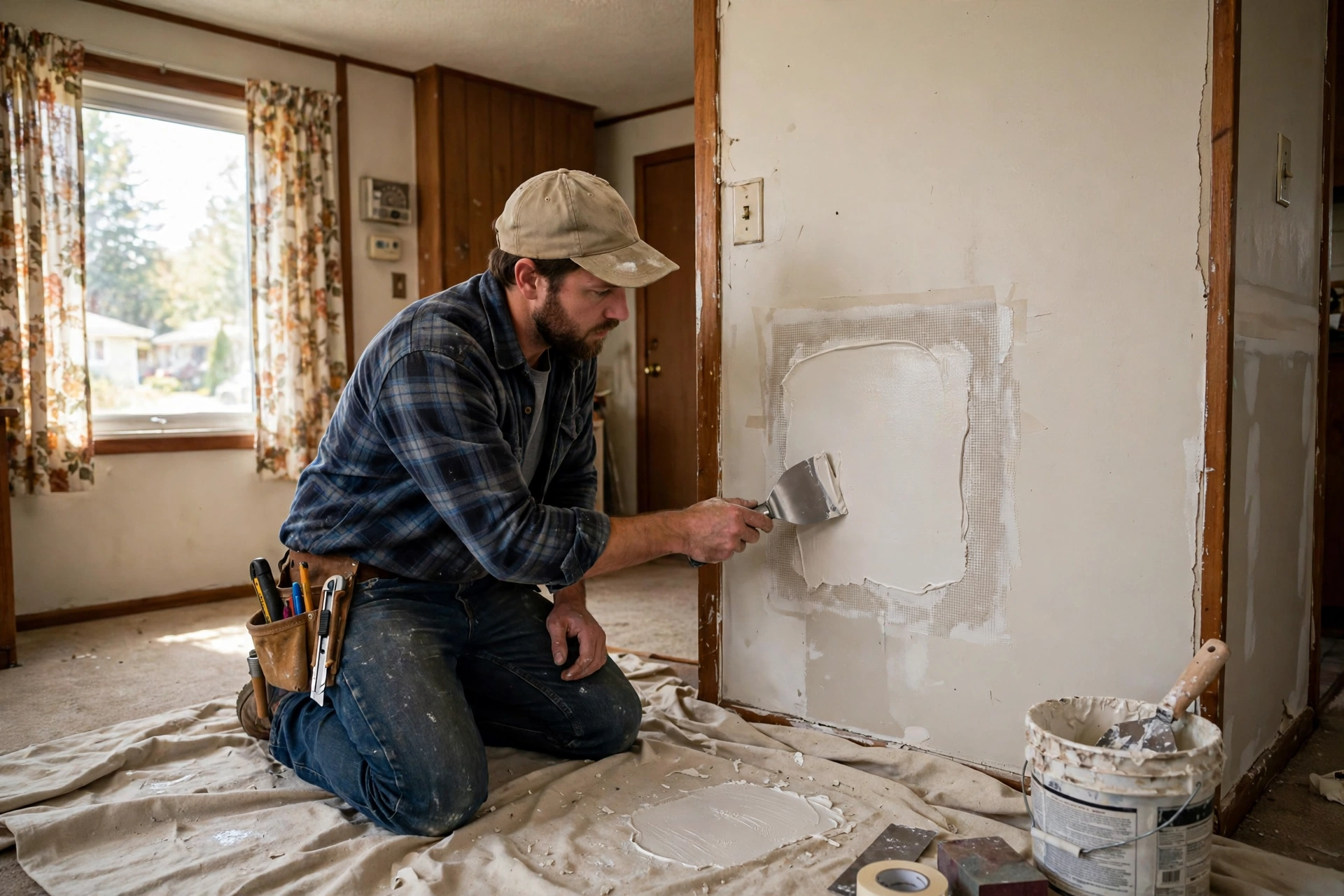
A lasting repair follows the same order: diagnose the cause and confirm any moisture source is fixed and dry; cut out soft or crumbling board; patch and tape in thin coats, feathered well beyond the repair; sand, check with a side light, and prime; then paint the full wall or ceiling plane so sheen matches. Rushing drying time between coats is the most common reason a repair looks good on day one and cracks by winter.
What Affects the Cost of Drywall Repair in an Older Home
Peter’s pricing is his own, so there are no figures here — but these are the factors that shape any quote in an older Mississauga home:
- How much board is unsound. A surface patch and a cut-out replacement are very different work.
- Whether the cause is fixed. Bundling the repair with fixing the leak or re-caulking costs more up front and far less than doing the drywall twice.
- Access. Ceilings, stairwells, and repairs above tubs take longer than open walls.
- Finish matching. Smooth walls in strong light and stippled older ceilings take more care to disappear.
- How much painting follows. One blended wall versus a full room repaint changes time and materials.
A Sensible Way to Walk Your Own Home
Once a year, walk your home in good daylight: corners above doors, ceilings under bathrooms, walls around windows, and the base of basement walls. Photograph anything you find with a coin for scale and check again in a few months. A mark that has not changed is almost always a simple repair. A growing, staining, or softening mark is the one to act on promptly — ideally before winter adds freeze and thaw.
Ready to Have Your Drywall Looked At in Mississauga?
If you have cracks that keep coming back, a ceiling stain you are tired of painting over, or walls in an older home that need proper repair before painting, Peter can help you work out what is cosmetic and what needs attention first. Call Peter at 647-699-3193 or send a message through the contact page to book your drywall repairs.