
Living in a condo solves a lot of house problems — no gutters to clean, no fence to fix, no driveway to seal. What it does not solve is the small stuff inside the unit. TVs still need mounting, flat-pack wardrobes still arrive in boxes, bathroom caulking still goes mouldy, and a door that sticks in a house in Erin Mills sticks exactly the same way in a tower near Square One.
The difference in a condo is not the work itself. It is everything around the work: who is allowed in the building, when noisy work can happen, how you get tools and materials up twenty floors, and which parts of your unit you are actually allowed to change. In Mississauga, where condo towers cluster around City Centre and the Square One area, along Hurontario in Cooksville, in Port Credit by the lake, and in newer buildings in Erin Mills and Churchill Meadows, those rules vary building by building. Getting them right first is what makes a small job stay small.

Start With Your Building’s Rules, Not the Job List
Every Mississauga condo is run by its own condominium corporation, and the corporation’s declaration, bylaws, and rules govern work inside your unit. Before you book anyone, check three things with your property management office or concierge:
Work hours. Most buildings restrict noisy work — drilling, hammering, sawing — to weekday daytime hours, often something like 9 a.m. to 5 p.m., with no contractor work on Sundays or holidays. A TV mount that takes forty minutes is still drilling into concrete or stud, so it counts. Plan the job inside the allowed window, not around it.
Who can work in the building. Many corporations require trades and handymen to sign in at security, show identification, and in some buildings provide proof of insurance before they are allowed upstairs. Some require work to be booked in advance with management, even for a half-day job. Ask what your building needs, and tell whoever you hire — showing up without the paperwork your building requires wastes everyone’s elevator booking.
What you can and cannot change. Inside your unit, paint, caulking, shelving, furniture, and most cosmetic repairs are usually yours to do. Anything touching plumbing lines, electrical panels, exterior walls, windows, balcony structures, or the corridor side of your entry door often belongs to the corporation or needs written approval. In Port Credit and Cooksville buildings especially, balcony door and window work is commonly a corporation item. When in doubt, ask management first — it is far easier than undoing finished work.
The Elevator Booking Is Part of the Job
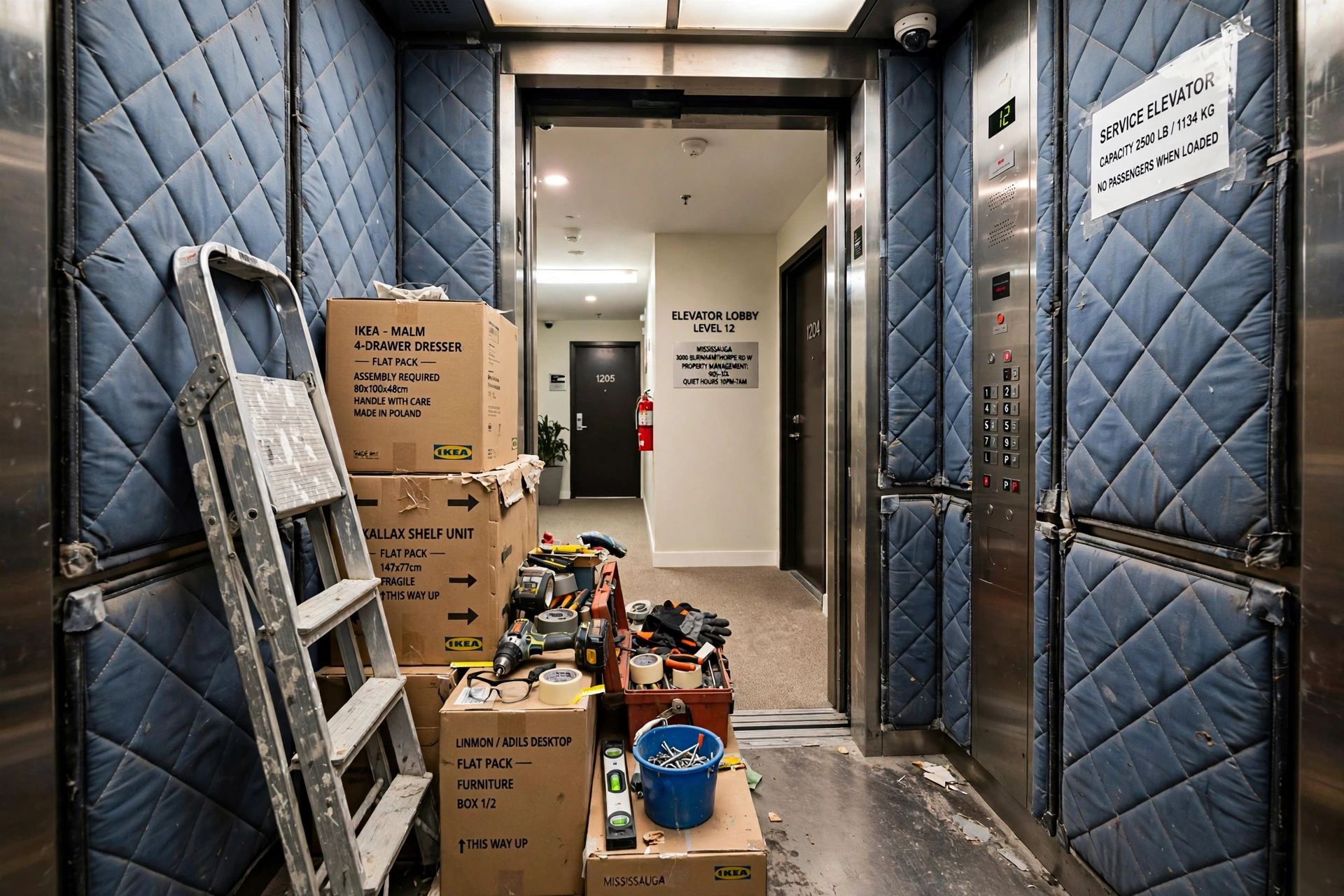
In a detached home, materials walk in the front door. In a condo, everything — a wardrobe, a sheet of drywall patch material, a ladder, sheets of shelving — rides the service elevator, and the service elevator is shared by the whole building.
Most Mississauga high-rises require you to reserve the service elevator for contractor visits that involve bulky materials or multiple trips. That usually means:
- Booking a specific time window with the concierge or through your building’s resident portal, sometimes days ahead in busy City Centre buildings where moves and deliveries compete for the same elevator.
- A refundable deposit or a signed elevator reservation form in some buildings.
- Using the padded service elevator only, and protecting hallways as the building directs.
- A hard end time. If the job runs long, the elevator does not — the next resident’s move starts on schedule.
The practical lesson: tell your handyman about the elevator window when you book the job, not when he arrives. A job list planned around a two-hour elevator slot gets batched properly — everything that needs to come up, comes up in the first trip, and everything that needs to go out, including packaging and old fixtures, goes down in the last one.
Low-rise condos and stacked towns in Meadowvale, Lisgar, and Churchill Meadows are usually simpler — often no elevator at all — but parking, visitor passes for a work vehicle, and noise hours still apply. Check those too.
The Small Jobs Condo Owners Book Most
These are the jobs that come up again and again in Mississauga condos. None of them is large. All of them are easier done properly, with the right fixings for the wall type in your building.
TV wall mounting. The most requested condo job, and the one most affected by wall construction. Many Mississauga towers have concrete walls on exterior and demising walls and metal-stud drywall on interior partitions. Each needs different anchors, and a mount hung on the wrong fixings will sag or pull out. Hiding cables, centring the screen over a console, and working inside noise hours are all part of doing it cleanly. That is the work covered by TV wall mounting in Mississauga.
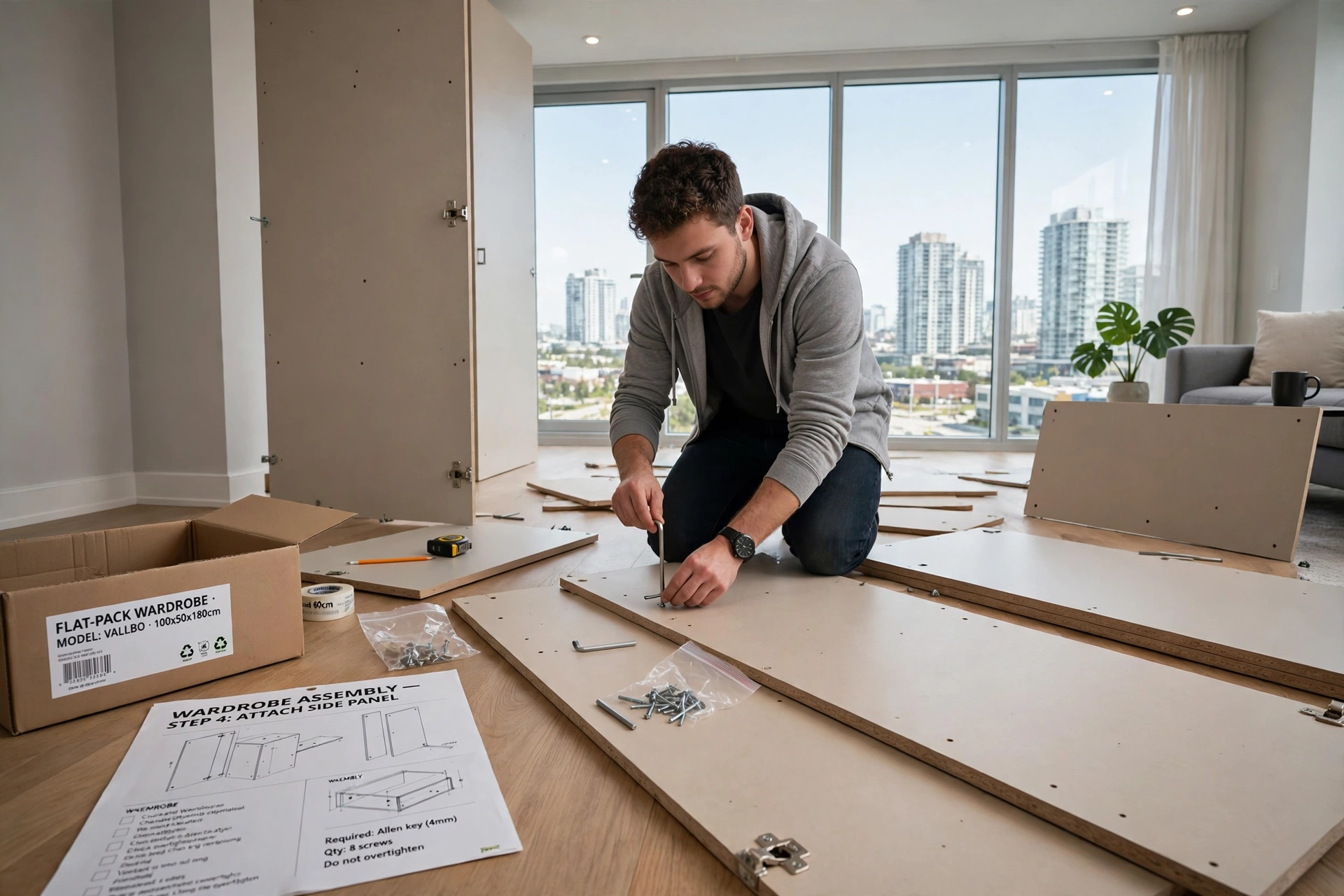
Furniture assembly. Condos and flat-pack furniture go together — wardrobes in a City Centre one-bedroom, storage beds, office desks in the second bedroom of an Erin Mills unit. The condo twist is logistics: boxes arrive at the loading dock, the elevator window is limited, and there is no garage to stage parts in. Assembly goes fastest when the pieces are already in the room they belong in before the booking starts. See furniture assembly in Mississauga for how a batch of pieces is handled in one visit.

Bathroom and kitchen caulking. Condo bathrooms work hard, ventilation is often modest, and the caulking around tubs, showers, and sinks is usually the first finish to fail. Blackened, split caulking is not just cosmetic — water behind tile in a condo can become a leak into the unit below, which turns a small job into a corporation insurance conversation. Re-caulking early, with the old sealant fully removed, is cheap insurance in the literal sense.
Drywall dings, dents, and patching. Moving furniture in tight condo hallways and elevator lobbies leaves a steady supply of dents, and a past leak from the unit above often leaves a stained ceiling patch even after the corporation has fixed the source. Once management confirms the leak itself is repaired and dry, the cosmetic side is a unit-owner job: cut out, patch, sand, and paint to blend. That is standard drywall repair in Mississauga.
Doors, closets, and hardware. Sliding closet doors that jump their tracks, bi-fold doors that bind, interior doors that no longer latch, loose handles, and slow-closing cabinet hinges — condos use space-saving hardware everywhere, and it wears. Most of it is adjustment or replacement of the track, rollers, or hinges rather than new doors.
Painting and touch-ups. A single accent wall, a full repaint between tenants in a rental unit near Square One, or touch-ups after a patch — painting is usually allowed without approval as long as it stays inside the unit, but balcony and exterior-side surfaces are off limits. Check your building’s move and work rules if paint and ladders are coming up in the elevator.
Curtain rods, shelving, mirrors, and pictures. Floor-to-ceiling glass looks great and leaves very few walls you can actually drill. Knowing which walls in your unit are concrete, which are metal-stud, and where the plumbing and in-suite fan coil runs sit matters before any bracket goes up.
Condos Have a Different Noise and Neighbour Problem
In a Streetsville or Lorne Park house, a drill at 10 a.m. bothers no one. In a condo, the unit below hears it through concrete. That is why work hours exist, and why a good condo job is planned as one concentrated visit rather than three short ones. Batch your list: the TV mount, the closet door, the caulking, and the mirror go on one booking, inside one elevator window, inside one noise window. Your neighbours, your concierge, and your own schedule will all prefer it.
A quick word with neighbours below you before sustained drilling is not required in most buildings, but it prevents the security call that pauses your job mid-window.
Renters, Landlords, and Who Books the Work
A large share of Mississauga condos, especially around City Centre and Cooksville, are rented. If you are a tenant, most repair obligations and approvals run through your landlord — get permission in writing before drilling into walls or changing hardware, because your lease, not just the condo rules, applies. If you are a landlord, remember the corporation’s contractor sign-in and insurance rules apply to anyone you send, and your tenant needs notice before a visit. Either way, the building’s rules sit on top of the arrangement between you.
What Affects the Cost of Condo Handyman Work
Peter’s pricing is his own, so there are no figures here — but these are the factors that shape any condo quote in Mississauga:
- How well the job is batched. One visit covering five small jobs costs less in total than five separate visits, each with its own sign-in and elevator booking.
- Building logistics. A tower with a tight two-hour elevator window and long walks from the loading dock takes more time than a low-rise with parking at the door.
- Wall type. Concrete drilling, metal-stud anchoring, and wood-stud work each need different tools and fixings, and concrete is the slowest.
- Approvals and timing. If your building requires management approval or restricts work to narrow weekday windows, scheduling — not the job itself — is often the constraint.
A Simple Plan for Your First Condo Booking
Write the job list room by room. Check work hours, sign-in, and insurance with management. Book the service elevator for the whole list, and have materials in the right rooms before the visit.
Ready to Book a Condo Handyman Visit in Mississauga?
If you have a list of small jobs in your condo — a TV to mount, furniture to build, caulking to replace, or drywall to patch — Peter can help you get them done in one building-friendly visit. Call Peter at 647-699-3193 or send a message through the contact page to book your condo repairs.