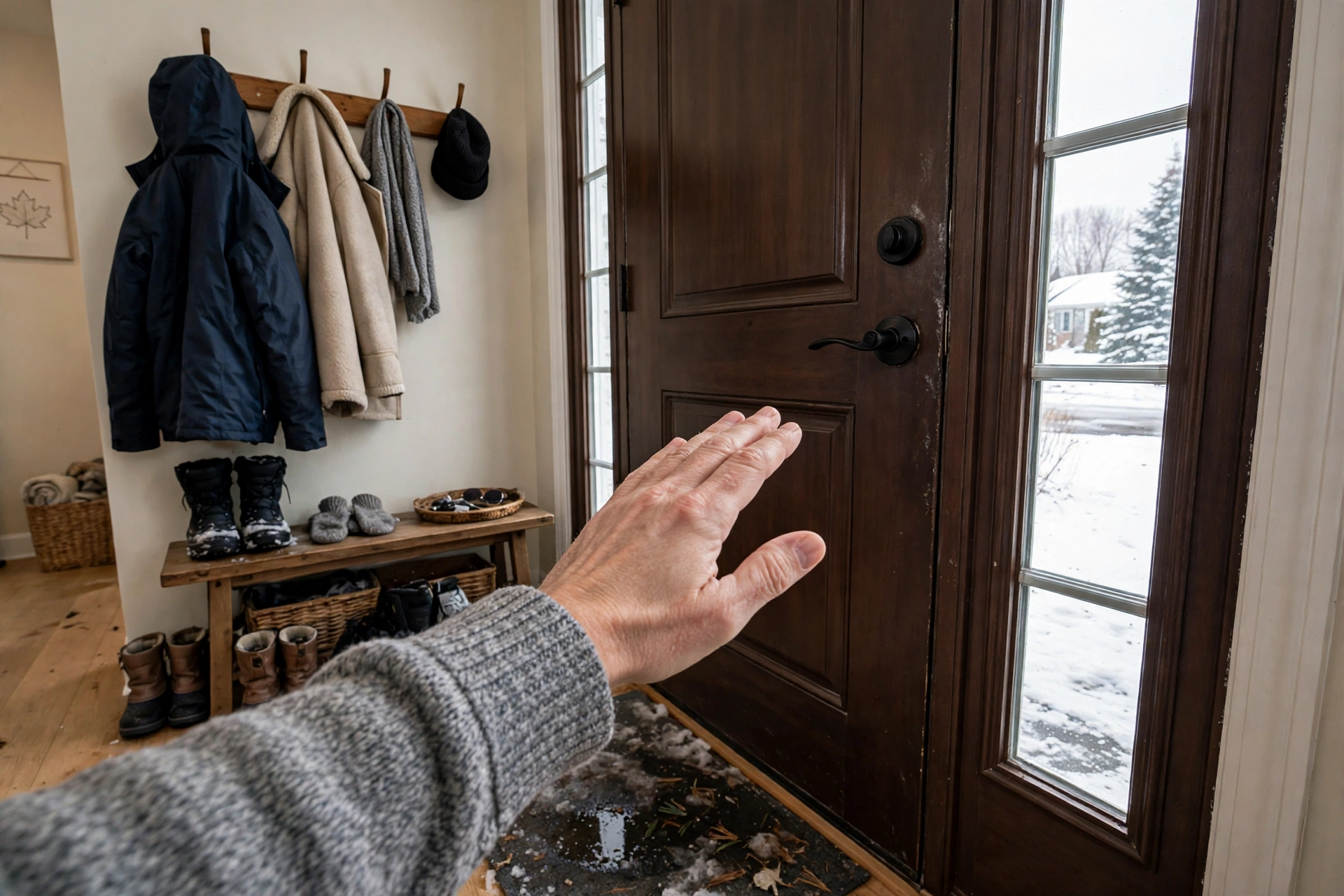

Mississauga winters do not ease in. One week in October you are raking leaves in Erin Mills or Meadowvale, and a few weeks later a cold wind is coming off Lake Ontario, temperatures are swinging above and below freezing, and any small gap, clog, or crack you ignored in the fall is letting in cold air or water. That freeze-thaw cycle is what makes fall preparation here different from a generic checklist. Water gets into a seam, freezes, expands, and widens it. A gutter that was only half-full of leaves in October becomes a solid block of ice in December. A door that stuck a little in the summer starts leaking cold air all winter.
The good news is that the jobs that prevent most winter problems are not major renovations. They are small, specific repairs — gutters, door seals, and window caulking at the top of the list — done while the weather still lets sealants cure and ladders sit safely. Whether you live in a 1970s or 1980s subdivision in Lisgar or Churchill Meadows, an older village home in Streetsville or Port Credit, a brick house in Lorne Park, or a condo near City Centre, this is the order to work through before the freeze.
Start Outside: Gutters and Downspouts
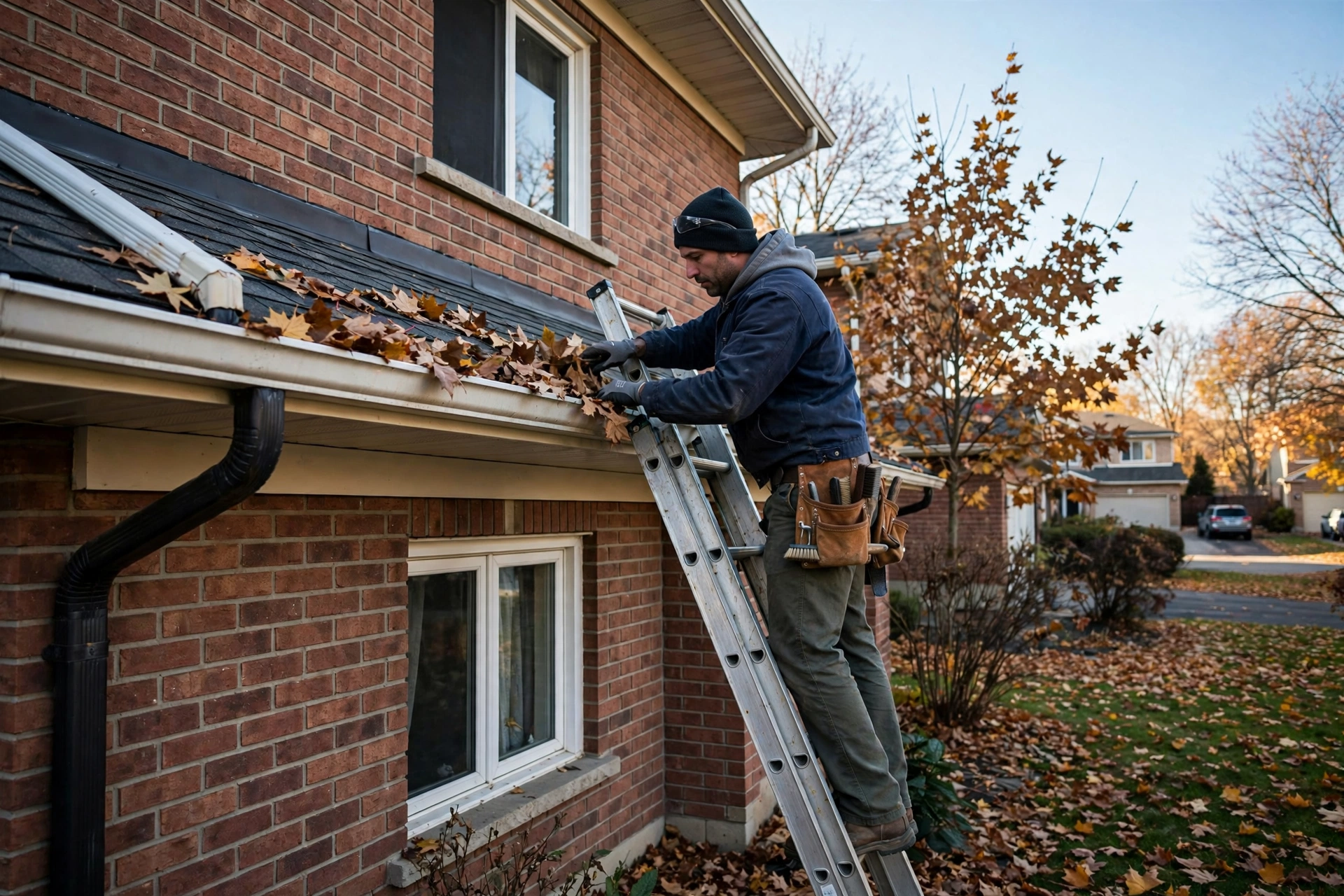
If you do only one exterior job this fall, make it the gutters. In Mississauga’s mature neighbourhoods — Lorne Park, Port Credit, and the older parts of Cooksville and Streetsville — large maples and oaks drop a heavy load of leaves straight into eavestroughs. In newer subdivisions in Churchill Meadows and Lisgar the trees are smaller, but roof grit, seeds, and construction debris still build up at corners and downspout openings.
A clogged gutter does not just overflow in the rain. In winter, standing water and wet leaves freeze into ice that adds weight, pulls fasteners loose, and forces meltwater back under shingles and into soffits. That is how a fall cleaning issue becomes a winter leak and a spring drywall problem inside.
Walk this check in October:
- Scoop leaves and sediment from the full run, not just the parts you can see from the ground, and flush the line with a hose.
- Check that water actually moves to the downspout. Standing water means the slope has sagged or a joint has dropped.
- Look at corners and seams for drips while you flush. Corner leaks are the most common failure in 1990s-era homes in Erin Mills and Meadowvale, where the original sealant has dried out.
- Confirm downspouts are clear and that extensions carry water well away from the foundation. In Malton and Cooksville, where many homes sit on flatter lots, a downspout dumping at the foundation wall is a direct route to a damp basement.
- Tighten loose spikes or brackets and re-seal leaking joints while temperatures are still above the minimum most sealants need to cure.
If a section is bent, pulling away from the fascia, or leaking at multiple joints, cleaning alone will not fix it. That is the point to book gutter repair in Mississauga rather than waiting until ice makes the damage worse and access harder.
While you are outside, shut off and drain exterior hose bibs, disconnect hoses, and check the caulking around the bib and any vents. A split pipe from a frozen tap often is not discovered until spring, when it thaws and leaks inside the wall.
Stop Drafts at the Doors
A winter draft is rarely a mystery. In most Mississauga homes it is the front door, the door to the garage, or a sliding patio door — especially in 1970s to 1990s homes in Meadowvale, Erin Mills, and Lisgar where the original weather stripping has compressed flat or torn at the corners.
On a windy day, hold the back of your hand slowly around the edge of a closed exterior door. If you feel cold air, the seal is failing. Other signs are daylight visible around the door, a door you have to shoulder closed, or dust and snow dusting the entry floor after a storm.
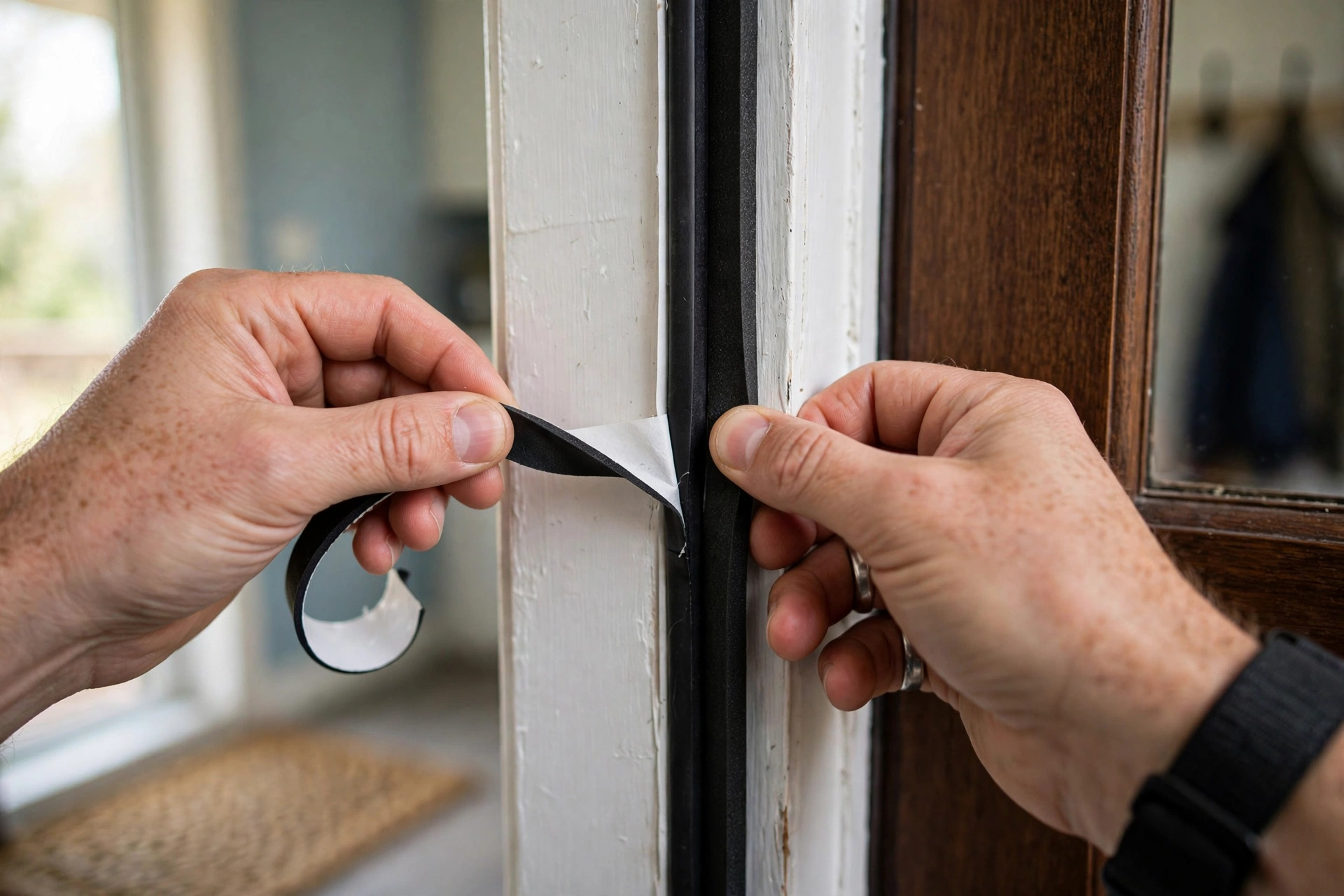
What a door needs depends on where the air is coming in:
- Around the sides and top: the weather stripping itself is worn. Replacing it restores the compression seal the door was designed for. Foam tape is a short-term patch; a fitted replacement lasts far longer.
- Along the bottom: the sweep or threshold is the problem. A worn sweep leaves a gap that no side stripping can fix, and it is also how meltwater and insects get in.
- The door drags or the gap is uneven: the hinges may have sagged or the strike plate shifted. Sealing an uneven gap without correcting the fit gives you a seal that fails again in one corner.
Getting this right matters for comfort and for heating costs. It also matters for condos. In City Centre and Cooksville high-rises, the draft is often under the suite entry door or around a balcony door. Check your building’s rules before changing anything on a corridor door — many buildings control that side — but balcony door seals and interior thresholds are usually the owner’s to maintain.
If you are not sure whether a door needs stripping, a sweep, or an adjustment, that diagnosis is exactly what weather stripping installation covers: fitting the right seal to the actual gap instead of layering tape over a fit problem.
Re-Caulk Windows and Exterior Seams While It Is Still Warm Enough
Caulking looks cosmetic until winter proves otherwise. The sealant around windows, doors, siding joints, and brick-to-frame transitions is a water and air barrier. When it cracks, shrinks, or pulls away — common after 10 to 15 Ontario summers and winters — wind-driven rain and melting snow get behind it, and cold air follows the same path inside.
Fall is the practical window to fix it. Most exterior sealants need temperatures to stay above about 5°C to cure properly, so a job that is straightforward in mid-October becomes unreliable in late November.
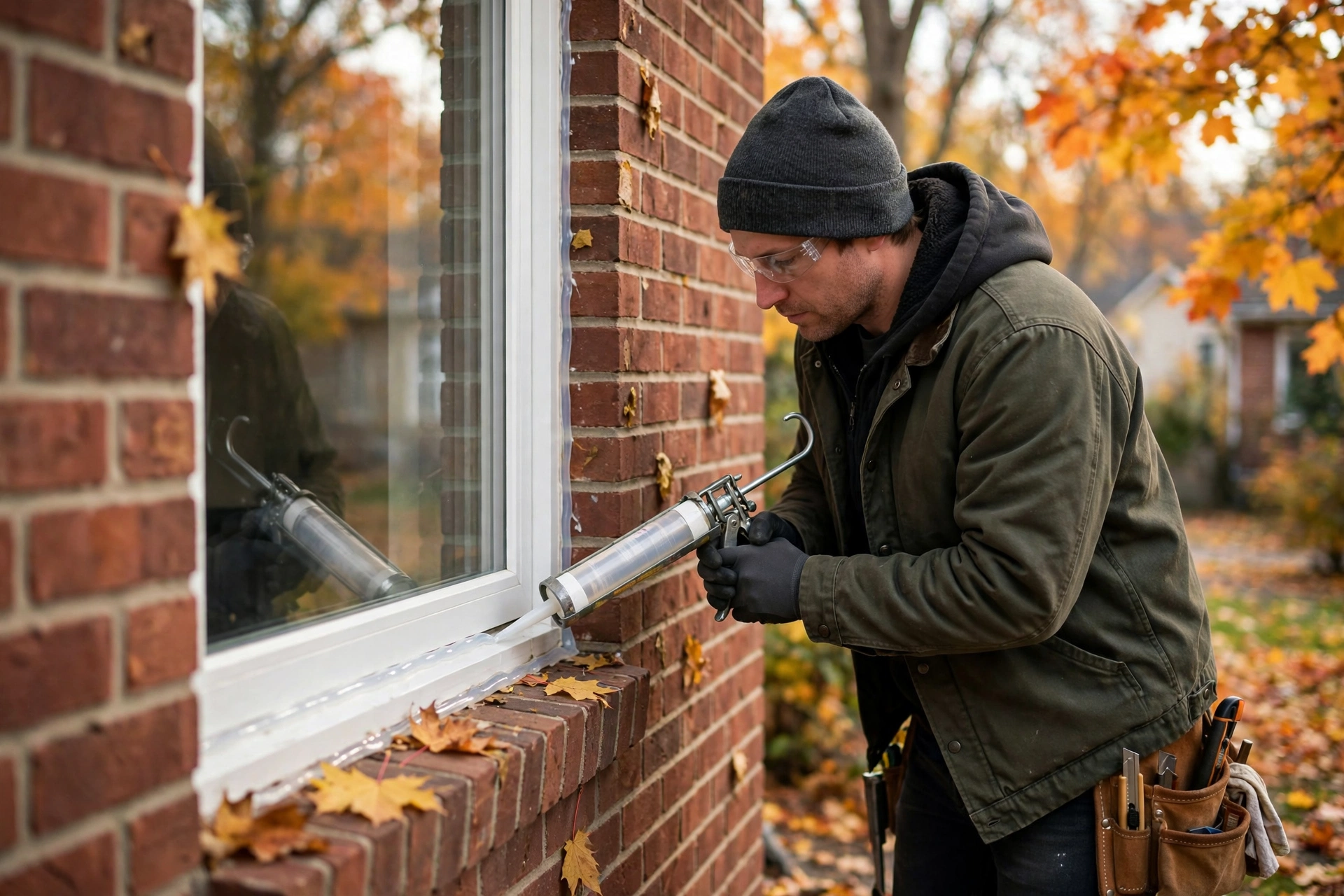
Check these spots on a dry day:
- The perimeter of every exterior window frame, especially south- and west-facing windows in Port Credit and Lorne Park that take the most sun and lake wind.
- Where siding meets trim, where brick meets a window or door frame, and around garage door frames.
- Bathroom and kitchen caulking inside. This is a different product and a different job, but fall is a good time to replace mouldy or split tub and shower seals before a season of long, steamy showers adds moisture to the wall behind the tile.
Good caulking work is mostly preparation: old, failed sealant comes fully out, the joint is cleaned and dry, and the new bead is the right type for the material — not interior paintable caulk used outside, and not a thick smear over a dirty joint. A bead laid over cracked old caulk will fail in the same place within a season.
For homes with many windows or second-storey work, caulking services in Mississauga bundle the exterior sealing into one visit while the weather window is still open, rather than leaving the highest and most exposed joints for last.
A Short Inside Checklist Before the First Deep Freeze
Once the exterior is sealed, spend an hour inside. These checks suit Mississauga’s housing stock in particular:
Basements in older homes. In Streetsville, Port Credit, and older Cooksville homes, check basement walls and the floor-wall joint for damp staining or efflorescence before winter. Meltwater pressure in late winter will find the same weak spots. Note any musty area now so you can tell in February whether it is getting worse.
Pipes on exterior walls. Kitchen and bathroom pipes that run in outside walls — common in renovated 1980s homes in Erin Mills — are the first to freeze in a cold snap. Keep cabinet doors open on the coldest nights and know where your main shut-off is before you ever need it.
Furnace and filters. Change the filter, confirm vents are not blocked by furniture, and test the thermostat before the first cold week, not during it. If a room is cold because a door does not close or a vent cover is damaged, fix that now as a small carpentry or trim job rather than turning the heat up all winter.
Safety basics. Test smoke and carbon monoxide alarms, and check that interior doors — especially the door between the house and the garage — close and latch fully on their own. That self-closing fit is a safety feature, not a nicety.
What Changes by Home Type

1970s–1990s subdivisions (Erin Mills, Meadowvale, Lisgar, Malton): Prioritise original seals. If the windows, door stripping, and gutter sealant are all original to the house, assume all three need attention in the same fall.
Older village homes (Streetsville, Port Credit, Lorne Park): Prioritise water. Mature trees mean heavier gutter loads, and older frames and brick joints mean more caulking joints to inspect. Check the foundation and downspout discharge carefully.
Newer homes (Churchill Meadows and newer infill): Prioritise settlement gaps. Newer builds often show their first real caulking splits and door-fit issues after a few freeze-thaw cycles. Catching them early keeps them small.
Condos (City Centre, Cooksville, Square One area): Prioritise balcony doors, interior seals, and the small jobs your building allows without approval. Book any elevator or contractor check-in your management requires well ahead — fall is a busy season for every building.
Do It Yourself or Book It In?
Cleaning a single-storey gutter run, changing a furnace filter, and testing for drafts are reasonable weekend jobs for many homeowners. Book help when the work involves a second-storey ladder, multiple failing gutter joints, several windows of failed exterior caulking, or doors that need fitting as well as sealing. Bundling those fall jobs into one visit is usually the most efficient route: the gutters, the worst door, and the failed window joints get done in one trip, while the weather still cooperates.
Do not wait for the first snowfall to discover the list. In Mississauga, the best week to do this work is a dry week in October — after most leaves in your neighbourhood have fallen, and before overnight temperatures stay below freezing.
Ready to Get Your Home Sealed Up Before Winter?
If your gutters are leaking, your front door is drafting, or your window caulking has cracked through, Peter can help you get it sorted in one visit. Call Peter at 647-699-3193 or send a message through the contact page to book your fall repairs before the freeze.